If you care about smooth gameplay, the cable you use matters more than most people think. The wrong DisplayPort cable can hold back your graphics card, limit refresh rates, or even cause screen flicker. In 2026, choosing the best DisplayPort cable for gaming isn’t just about buying the most expensive option—it’s about finding one that matches your monitor’s specs and your setup. Whether you’re aiming for 240Hz or pushing into 4K and 8K, this guide will walk you through the top choices so you can play without compromise.
What is the Best DisplayPort Cable for Gaming in 2026?
The best DisplayPort cable for gaming in 2026 is a VESA-certified DisplayPort 2.1 (DP80) cable. It supports up to 80Gbps bandwidth, enabling smooth 4K at 240Hz and even 8K gaming without compression. For most gamers, this ensures maximum performance, stability, and future-proof compatibility with next-generation GPUs and monitors.

In this guide:
Quick Summary:
- Best for RTX 5090/5080: Silkland DP 2.1 (80Gbps) - Future-proof for UHBR20.
- Best for Esports (360Hz+): Club 3D DP 2.1 - Maximum signal stability.
- Pro Tip: Always look for the DP80 or DP54 VESA logo to ensure the cable meets 2026 performance standards.
Part 1: Why DisplayPort Matters for Gaming?
Higher Bandwidth for High Refresh Rates
For competitive gaming, refresh rate is everything. Even with a powerful GPU and fast monitor, your setup won’t perform at its best if the cable becomes a bottleneck. DisplayPort is built for PC gaming and typically offers more bandwidth than HDMI. With the right cable, you can fully unlock 240Hz or even 360Hz at 1080p and 1440p—making cable choice just as important as your graphics card.
Not all DisplayPort 2.1 cables are equal. In 2026, the difference between UHBR10, UHBR13.5, and UHBR20 matters. A true DP80 cable supports UHBR20 and delivers up to 80Gbps bandwidth for uncompressed 4K@240Hz. If you’re using a high-end GPU like the RTX 50-series, a lower-spec cable may trigger DSC earlier and limit performance.
Unlocking 4K and 8K Gaming
Modern monitors are pushing beyond Full HD, with many players upgrading to 4K and even ultra-wide 5K or 8K displays. This requires massive data transfer, and not every cable can handle it. If you’re planning to game at higher resolutions, investing in the best 8K DisplayPort cable or a best DisplayPort 2.1 cable ensures smooth visuals without flicker or dropped frames. Paired with a powerful GPU like the RTX 5090 and a monitor such as the Samsung Odyssey G9, the right DisplayPort cable becomes essential to unlock the full experience.
Why Cable Quality Makes a Difference
In a high-performance gaming setup, cable quality isn’t just an afterthought—it directly impacts signal integrity. A DisplayPort 2.1 cable is designed to handle up to 80Gbps of bandwidth, enabling features like 4K@240Hz or 8K HDR gaming. But if you’re using a lower-grade cable, the signal can degrade under this heavy data load. The result? Reduced refresh rates, frame drops, compression artifacts, or even complete screen blackouts.
The difference often comes down to engineering. Premium cables use tighter twisted pairs, better shielding against electromagnetic interference (EMI), and precise impedance control to minimize jitter and crosstalk. By contrast, cheap or outdated cables frequently cut corners in these areas, which is why they fail when pushing modern GPUs and monitors to their limits.
This is also why communities like Reddit repeatedly highlight the same conclusion: the best DisplayPort cables are those that meet VESA certification standards.
If you're comparing displayport 1.4 vs 2.1 for gaming, here’s the key difference:
DisplayPort 1.4 vs DisplayPort 2.1: Full Comparison for Gaming
| Feature | DisplayPort 1.4 | DisplayPort 2.1 |
|---|---|---|
| Max Bandwidth | 32.4 Gbps (25.92 Gbps effective) | Up to 80 Gbps (~77.4 Gbps effective) |
| Encoding Efficiency | 8b/10b (~20% overhead) | 128b/132b (~3% overhead) |
| Max Resolution | 8K@30Hz (without DSC) | 10K@60Hz (uncompressed) |
| 4K Gaming | Up to 120Hz (native) | Up to 240Hz+ (native) |
| 8K Support | Requires DSC | Native or DSC |
| Display Stream Compression (DSC) | Required for high refresh rates | Optional (less reliance) |
| Multi-Monitor Support | Limited (bandwidth constrained) | Much stronger (higher bandwidth) |
| Typical Use Case | 1440p / 4K 144Hz gaming | 4K 240Hz / 8K / future GPUs |
| Future-Proofing | Moderate | Excellent |
Bottom line: DisplayPort 1.4 is still sufficient for most gamers using 1440p or 4K 144Hz monitors. However, DisplayPort 2.1 offers nearly 3× the bandwidth, enabling true 4K@240Hz and 8K gaming without compression—making it the better choice for high-end and future-proof setups.
Part 2: Best DisplayPort Cables for Gaming in 2026
Choosing the right cable doesn’t need to be complicated. To save you time, we’ve picked out some of the best DisplayPort cables for gaming in 2026—covering trusted brands that gamers already rely on. Whether you want professional-grade certification, reliable everyday performance, or a balance of value and durability, here are four top picks worth considering.
1. Cable Matters VESA Certified DisplayPort 2.1 Cable
Best Overall DisplayPort Cable for Gaming
Cable Matters has built a strong reputation among PC gamers and professionals for delivering standards-compliant, dependable cables. Its VESA-certified DisplayPort 2.1 cable is a safe, well-rounded choice for users running high-refresh-rate gaming setups or exploring early 8K displays.

Why it’s the best fit?
- Official VESA certification ensures full compliance with DisplayPort 2.1 specs.
- Supports up to 80Gbps bandwidth for 8K@165Hz and 4K@240Hz.
- Available in multiple lengths with durable build quality.
- Widely trusted by enthusiasts and professionals.
Best for:
- Gamers who want a reliable, certified DisplayPort cable.
- High-refresh-rate setups such as 4K@240Hz
- Users who prioritize stability and standards compliance over experimental features.
2. UGREEN DisplayPort 1.4 Cable
Best Value DisplayPort Cable for Gaming (DP 1.4)
UGREEN is known for offering consumer-friendly accessories that balance affordability and everyday reliability. Its DisplayPort 1.4 cable is a practical option for gamers who want smooth, high-quality visuals without paying for next-generation features they may not need.

Why it’s the best fit?
- Supports 8K@60Hz and 4K@144Hz with HDR.
- Strong braided design for added durability.
- Backward compatible with older DP versions.
- Affordable and widely available on major retailers.
Best for:
- Budget-conscious gamers.
- 1440p high-refresh-rate or 4K 144Hz gaming setups.
- Users who want a reliable DP 1.4 cable without overspending.
For gamers moving beyond standard 4K 144Hz and into next-generation displays, DisplayPort 2.1 becomes increasingly relevant.
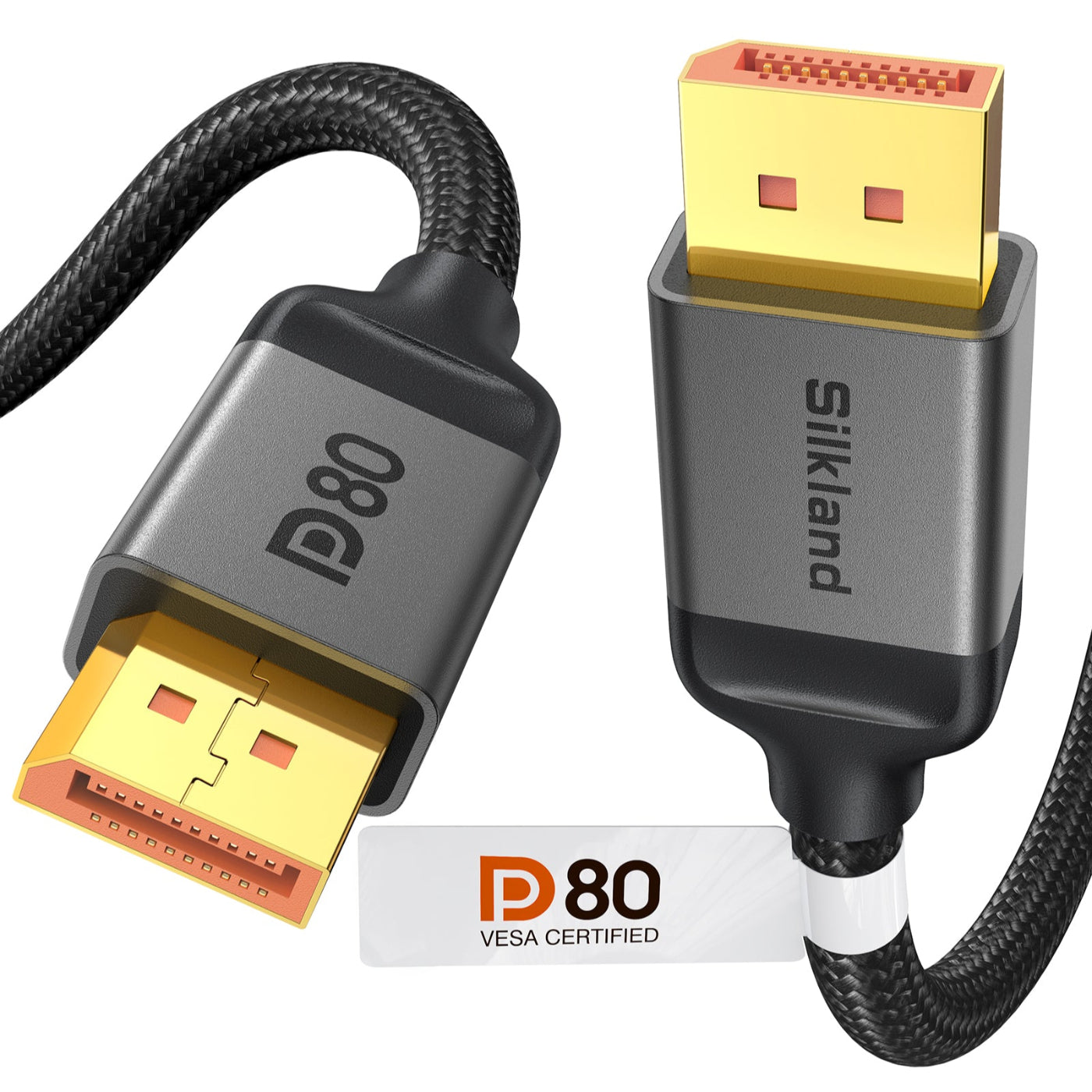
3. Silkland VESA Certified DisplayPort 2.1 Cable 80Gbps
Uncompromised UHBR20 Performance for 4K 240Hz and Next-Gen Systems
Silkland’s DisplayPort 2.1 cable is engineered for users who demand the absolute ceiling of current display technology. As a VESA-certified DP80 cable, it fully supports the UHBR20 (Ultra-High Bit Rate 20) standard, delivering a massive 80Gbps total bandwidth. This ensures a stable, high-speed pipeline capable of driving uncompressed 4K at 240Hz or 8K at 60Hz, making it an essential link for flagship gaming rigs and professional workstations.
By leveraging the full potential of UHBR20, this cable reduces the necessity for heavy Display Stream Compression (DSC), providing a purer signal with minimal latency while ensuring long-term compatibility with upcoming high-performance GPUs.
Why it’s a premier choice?
- VESA-Certified DP80: Supports the maximum 80Gbps bandwidth and UHBR20 transmission, enabling uncompressed 4K@240Hz, 8K@60Hz, and up to 16K resolution with DSC.
- Built for High-Performance Gaming: Fully compatible with VRR (Variable Refresh Rate), ALLM (Auto Low Latency Mode), FEC, and MST for seamless multi-monitor configurations.
- Superior Signal Integrity: Constructed with 28AWG tinned copper conductors and triple-layer shielding, specifically designed to handle the rigors of UHBR20 frequencies while preventing EMI-related flickering or dropouts.
- Professional Durability: Features 24K gold-plated connectors and a high-density nylon braided jacket, tested to survive over 15,000 bends for long-term reliability.
- Broad Hardware Ecosystem: Verified for use with elite monitors (Samsung Odyssey G9, Alienware, ROG, LG Ultragear) and the latest GPUs (RTX 40/50 series, AMD Radeon 7000 series).
- Backed by 24-month warranty and responsive customer support.
Best for:
- High-Refresh Gaming: Users running 4K monitors at 240Hz who want to avoid signal flickering or dropouts.
- System Builders: Those looking for a future-proof interconnect that will remain relevant through multiple GPU upgrade cycles.
- Visual Purists: Enthusiasts seeking the highest possible bit rate with minimal signal degradation.
- Workstation Users: Professionals requiring stable multi-monitor or ultra-high-resolution 8K/10K output.
If you’re investing in a 4K@240Hz monitor or planning for next-generation GPUs, a full-bandwidth DisplayPort 2.1 cable like this becomes less of an upgrade—and more of a requirement.
4. Club 3D DisplayPort 2.1 Cable
Best DisplayPort Cable for 1440p 360Hz Competitive Gaming
For enthusiasts and professionals pushing the boundaries of display technology, the Club 3D DisplayPort 2.1 DP80 cable offers a significant leap over legacy DP 1.4 standards. As a VESA-certified cable, it is engineered to handle a massive 80Gbps bandwidth, providing the stability and throughput required for 4K 240Hz and 8K 60Hz setups without compromise.
This cable ensures that your hardware operates at its full potential. It reduces the reliance on heavy compression and eliminates the common synchronization issues—such as flickering or signal dropouts—often encountered when pushing high-resolution, high-refresh-rate displays to their limits.

Why it’s the best fit?
- With a peak bandwidth of 80Gbps, it provides massive "headroom" for 4K 240Hz or 8K 60Hz uncompressed output, ensuring absolute signal integrity.
- Unlike entry-level DP 2.1 cables (DP40/DP54), this cable unlocks the maximum throughput of next-gen GPUs and flagship monitors.
- Featuring 26 AWG wiring and high-quality shielding, it is designed to minimize EMI (Electromagnetic Interference) while maintaining flexibility for clean desk setups.
- Built for scenarios where visual fidelity and zero-latency performance are non-negotiable, making it a future-proof foundation for high-end rigs.
Best for:
- Users with flagship 4K 240Hz monitors who want a stutter-free, tear-free experience.
- Professionals working with 8K 60Hz or ultra-wide resolutions that demand flawless data transmission.
- Players who want to eliminate the DP 1.4 bandwidth bottleneck and ensure compatibility with upcoming display hardware.
Final Recommendation
Whether you’re building a new gaming PC or upgrading your monitor, these four cables represent the best DisplayPort cables for gaming in 2025. If you’re looking for the perfect mix of performance, reliability, and value, the Silkland DisplayPort 2.1 cable is our top recommendation.
Part 3: How to Choose the Best DisplayPort Cable – Key Factors for Gaming
Picking the right DisplayPort cable can feel confusing, especially when every option claims to support high performance. In reality, not all cables are equal, and the wrong one can hold back your system. To find the best DisplayPort cable for gaming, you’ll want to focus on a few key factors that directly affect speed, stability, and long-term use.
1. Certification and Compatibility
One of the first things to check is certification. A VESA certified DisplayPort cable guarantees it meets strict performance standards, reducing the risk of screen flicker, blackouts, or bandwidth drops. While uncertified cables might work, they often fail at higher refresh rates like 240Hz or 360Hz. If you’re wondering what is the best DisplayPort cable for gaming, starting with certification is the safest move.

2. Refresh Rate and Resolution Support
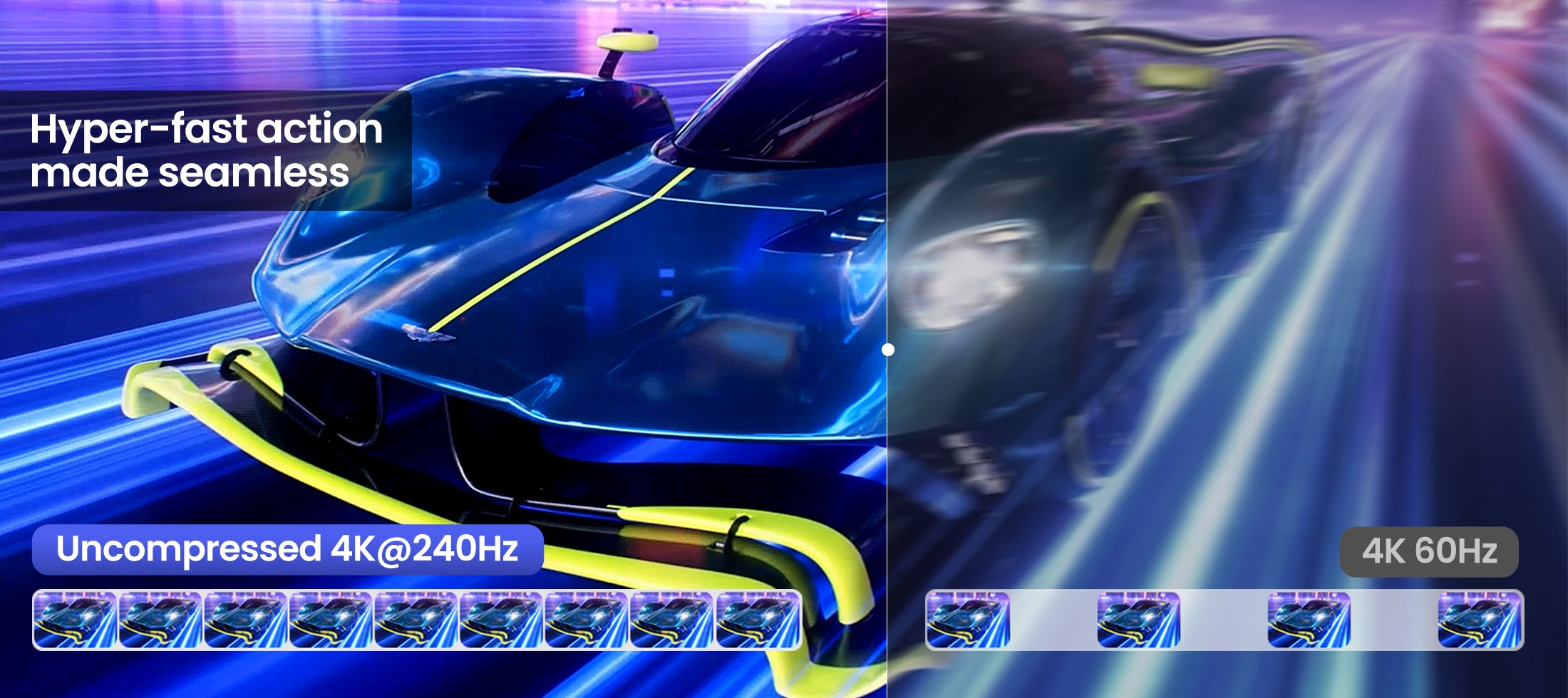
Gamers pushing into 4K, 8K, or high refresh monitors need cables that can handle more bandwidth. A cheap or outdated cable might cap you at 60Hz, even if your GPU and monitor support higher. Always check if the cable supports your target resolution and refresh rate—whether that’s 240Hz competitive gaming or smooth 8K visuals.
3. Build Quality and Durability
Beyond specs, build quality matters. Look for reinforced connectors, braided jackets, and reliable shielding. The best DisplayPort cable brand isn’t just about performance—it’s also about making sure the cable lasts through years of use without signal loss or physical wear.

4. Length and Setup Needs
Longer cables introduce more signal strain, so keep them as short as possible unless you truly need the reach. For most setups, 6 to 10 feet works well. If you need longer runs—like connecting a gaming PC to a wall-mounted display—choosing a high-quality DisplayPort 2.1 cable from a trusted manufacturer ensures stable performance at extended lengths.
5. Future-Proofing
Display technology is moving fast. A cable that works fine today may limit you when you upgrade to a faster monitor next year. Picking a certified DisplayPort 2.1 cable for gaming gives you more headroom for future GPUs, 360Hz monitors, and higher resolutions, making it a smart long-term investment.
FAQ
1. What is the best DisplayPort cable for gaming?
For most gamers in 2025, the best choice is a VESA certified DisplayPort 2.1 (DP80) cable. It provides the bandwidth needed for today’s high-refresh 4K monitors and tomorrow’s 8K displays. While a DP 1.4 cable can still handle 1440p or even 4K gaming, DP 2.1 ensures you won’t run into limits as games and hardware keep pushing visual performance further.
2. Is DisplayPort better than HDMI for gaming?
When paired with a gaming monitor, DisplayPort 2.1 generally offers more headroom than HDMI 2.1. With higher bandwidth, it supports smoother 4K and 8K gameplay and advanced features like Adaptive Sync, FreeSync, and G-Sync. HDMI is excellent for consoles, but for PC gamers who want the best refresh rates and future-ready performance, DP 2.1 cables are hard to beat.
3. Which is the best DisplayPort cable for 240Hz monitors?
If your goal is 240Hz gameplay at 4K, you’ll want a DP 2.1 DP80 cable. It guarantees stable, uncompressed performance without screen flicker or dropped frames. A DP 1.4 cable may handle 240Hz at lower resolutions like 1080p or 1440p, but for higher resolutions, DP 2.1 is the safer investment.
4. Do I need the best DisplayPort 2.1 cable for 8K gaming?
Yes—if you’re aiming for 8K or ultra-high refresh 4K, a DP 2.1 cable is essential. Its 80Gbps bandwidth is built for the massive data load of next-gen visuals. Technically, DP 1.4 with DSC can run 8K, but it’s closer to a workaround than a long-term solution. For a consistent, premium 8K gaming experience, DP 2.1 is the clear answer.
5. Does DisplayPort carry audio?
Yes, DisplayPort supports both video and audio transmission over a single cable, similar to HDMI. It can carry multi-channel digital audio along with high-resolution video. For a detailed explanation, read our full guide on Does DisplayPort Carry Audio?.
Conclusion
If you want the most out of your gaming monitor and GPU, choosing the best DisplayPort cable for gaming is essential. A DisplayPort 2.1 cable gives you the freedom to push higher refresh rates, sharper resolutions, and smoother visuals without worrying about bottlenecks. Whether you play fast-paced shooters at 240Hz or explore detailed open worlds in 4K and beyond, the right cable ensures your hardware performs as it should.
Explore Silkand's High-Quality VESA Certified DP Cables >>
RELATED PRODUCTS
[VESA Certified] Silkland Displayport 2.1 Cable 80Gbps
Amazon’s first VESA-Certified DP80 cable delivers 80 Gbps for uncompressed 4K@240Hz (up to 16K@60Hz with DSC). With gold-plated connectors, triple shielding, and 28AWG copper conductors, it ensures stable, durable performance, plus DP 2.0/1.4 compatibility and a 24-month warranty.

[VESA Certified] Silkland Displayport 2.1 Cable 54Gbps
Silkland’s VESA-Certified DP 2.1 cable delivers 54Gbps bandwidth for uncompressed 8K, 2K@360Hz, and 4K@480Hz (8K@165Hz with DSC) with HDR10+ and HDCP 2.3. Optimized for gaming with VRR, FEC, ALLM, MST, and 32-bit audio, it’s built tough with a press-to-release latch, triple shielding, and double-braided nylon, plus a 24-month warranty and responsive support.
Share:
Why Is My Phone Charging Slow? 10 Common Reasons and Fixes
What Is HDMI ARC and eARC?