Although coaxial cables and ordinary cables may look similar, they are designed for different jobs. A coaxial cable uses a shielded structure to carry high-frequency signals with minimal interference, while a regular cable is typically used for power delivery or basic signal transmission.
In this guide, we'll break down the key differences, common use cases, and how to choose the right cable for your setup.

📍 In this guide:
Part 1: Quick Answer - Coaxial Cable vs Ordinary Cable
The main difference between a coaxial cable and an ordinary cable is shielding. A coaxial cable is specifically designed to carry high-frequency signals while minimizing interference, whereas an ordinary cable is typically used for power delivery or basic signal transmission and lacks the same level of signal protection.
| Feature | Coaxial Cable | Ordinary Cable |
|---|---|---|
| Primary Purpose | High-frequency signal transmission | Power delivery or basic signal transfer |
| Internal Structure | Center conductor, insulation, shielding, outer jacket | One or more conductors with basic insulation |
| Shielding | Yes | Usually limited or none |
| Resistance to Interference | Excellent | Moderate to low |
| Common Uses | Cable internet, TV, satellite, CCTV | Electrical wiring, power cords, speaker wires |
| Signal Quality Over Distance | Better | More susceptible to signal degradation |
| Cost | Typically higher | Usually lower |
Key Takeaway
Choose a coaxial cable when signal quality, reliability, and interference protection are important. For applications such as cable internet, TV antennas, satellite systems, and CCTV installations, coaxial cables are generally the better choice. Ordinary cables remain suitable for power transmission and other low-frequency applications where advanced shielding is not required.
To understand why coaxial cables offer better signal protection, it helps to look at how they're built.
Part 2: What Is a Coaxial Cable?
A coaxial cable is a type of shielded electrical cable designed to transmit high-frequency signals with minimal interference. It is widely used for cable internet, television broadcasts, satellite systems, CCTV installations, and other applications where maintaining signal quality is essential.
Unlike an ordinary cable, a coaxial cable features a specialized layered design. At its core is a center conductor that carries the signal. Surrounding it are an insulating dielectric layer, one or more shielding layers, and an outer protective jacket.
Basic Structure of a Coaxial Cable
- Center Conductor – Carries the electrical signal.
- Dielectric Insulation – Separates the conductor from the shielding layer.
- Shielding Layer – Helps block electromagnetic interference (EMI) and signal leakage.
- Outer Jacket – Protects the cable from physical damage and environmental exposure.

This multi-layer construction is what makes coaxial cables different from most ordinary cables. By shielding the signal from external interference, coaxial cables can maintain stronger and more reliable performance over longer distances.
That's why they remain a common choice for applications where signal integrity matters, including broadband internet connections, TV antennas, satellite receivers, and security camera systems.
Part 3: 5 Key Differences Between Coaxial and Ordinary Cables
Although coaxial cables and ordinary cables may look similar from the outside, they are designed for very different purposes. Their construction, performance, and intended applications vary significantly, which is why choosing the right cable can directly impact signal quality and overall system reliability.
1. Internal Construction
The most fundamental difference lies in how the cables are built.
An ordinary cable typically consists of one or more conductors surrounded by insulation. This simple design works well for power delivery and basic electrical applications but offers limited protection for sensitive signals.
A coaxial cable, by contrast, features a layered structure that includes a center conductor, dielectric insulation, a conductive shielding layer, and an outer protective jacket. This design keeps the signal isolated from external electrical noise while reducing signal leakage.
The additional shielding is what allows coaxial cables to deliver more stable performance in applications where signal integrity matters.
This carefully engineered structure also allows coaxial cables to maintain consistent electrical characteristics, which is one reason they are commonly used in communication systems.
2. Resistance to Electromagnetic Interference (EMI)
One of the biggest advantages of a coaxial cable is its ability to resist interference.
Electronic devices, power lines, wireless equipment, and even household appliances can generate electromagnetic interference (EMI). When interference reaches a signal cable, it can reduce signal quality and affect performance.
Because the signal conductor is surrounded by shielding, a coaxial cable is far less vulnerable to external noise than a standard cable. This protection helps maintain a cleaner and more consistent signal, particularly in environments where multiple electronic devices operate nearby.
Ordinary cables generally provide less protection against EMI, making them more susceptible to signal degradation in demanding applications.
3. Signal Quality Over Distance
Signal loss becomes increasingly important as cable length increases.
Thanks to their shielded design, coaxial cables can carry high-frequency signals over longer distances while maintaining signal quality. This is one reason they are widely used for cable internet, television systems, satellite connections, and CCTV installations.
Ordinary cables can also transmit signals effectively, but they are typically better suited to lower-frequency applications where signal integrity is less critical. In situations that require reliable long-distance signal transmission, coaxial cables generally offer a clear performance advantage.
4. Typical Applications
The intended use of each cable type reflects how they are designed.
Coaxial cables are commonly used for broadband internet, TV antennas, satellite receivers, RF communication systems, and security camera networks. These applications rely on stable signal transmission and strong resistance to interference.
Ordinary cables are more commonly used for electrical wiring, power cords, speaker wires, appliance connections, and other everyday electrical applications where transmitting power is the primary goal.
In simple terms, coaxial cables are optimized for signal transmission, while ordinary cables are often optimized for power delivery.
5. Cost and Installation Considerations
Because of their specialized construction, coaxial cables are usually more expensive than ordinary cables.
The additional shielding and materials increase manufacturing complexity, but they also provide better signal protection and long-term reliability in communication systems.
Ordinary cables are often less expensive, easier to install, and perfectly adequate for many electrical applications. However, when signal quality is a priority, the added investment in a coaxial cable is often worthwhile.
Part 4: Which Cable Should You Choose?
The right cable depends on what you're trying to transmit.
In simple terms, coaxial cables are engineered for signal transmission, while ordinary cables are primarily designed for power delivery. Understanding this distinction makes it much easier to choose the right cable for your application.
✔ Choose a Coaxial Cable for Signal-Critical Applications
Ordinary cables are generally the better choice when the primary goal is delivering electrical power rather than transmitting sensitive signals.
Common examples include:
- Cable internet connections.
- TV antenna systems.
- Satellite TV installations.
- CCTV and security camera networks.
- RF communication equipment.
- Long-distance signal transmission.
These applications rely on stable, uninterrupted signal delivery. Because coaxial cables use dedicated shielding to reduce electromagnetic interference (EMI) and signal leakage, they can maintain more consistent performance over longer distances and in electrically noisy environments.
✔ Choose an Ordinary Cable for Power Delivery and Basic Electrical Connections
Ordinary cables are generally the better choice when the primary goal is delivering electrical power rather than transmitting sensitive signals.
They are commonly used for:
- Household electrical wiring.
- Power cords.
- Appliance connections.
- Speaker wiring.
- General low-frequency electrical applications.
In these scenarios, the advanced shielding found in a coaxial cable usually provides little additional benefit. A standard cable can often deliver the required performance at a lower cost and with simpler installation.
Recommended Cable Type by Application
| Application | Recommended Cable Type | Why |
|---|---|---|
| Cable Internet | Coaxial Cable | Designed for reliable high-frequency signal transmission |
| TV Antenna | Coaxial Cable | Helps preserve signal quality and reduce interference |
| Satellite TV | Coaxial Cable | Supports long-distance signal delivery with minimal loss |
| CCTV Systems | Coaxial Cable | Provides stable video signal transmission |
| RF Equipment | Coaxial Cable | Built for radio-frequency signal applications |
| Household Electrical Wiring | Ordinary Cable | Primarily intended for power delivery |
| Power Cords | Ordinary Cable | Cost-effective for electrical connections |
| Speaker Wiring | Ordinary Cable | Suitable for low-frequency audio applications |
Bottom Line
If your application depends on reliable signal transmission, a coaxial cable is usually the better choice. Its shielded construction helps protect signal quality, reduce interference, and maintain performance over distance.
For power delivery and everyday electrical connections, an ordinary cable is often the more practical and economical solution.
Part 5: Can You Replace a Coaxial Cable With an Ordinary Cable?
In most cases, no—an ordinary cable should not be used as a direct replacement for a coaxial cable.
Although both types of cables conduct electrical signals, they are designed for different purposes. Coaxial cables are engineered to carry high-frequency signals while minimizing interference and signal loss. Ordinary cables typically lack the shielding and structural design required to maintain signal integrity in these applications.
For example, replacing a coaxial cable in a cable internet, TV antenna, satellite, or CCTV system may result in:
- Reduced signal quality.
- Increased interference.
- Connection instability.
- Poor video or network performance.
- Greater signal loss over distance.
That said, not every application requires a coaxial cable. If the cable's primary role is delivering electrical power rather than transmitting sensitive signals, a standard cable is often the more appropriate and cost-effective choice.
The key is to match the cable to the application. When reliable signal transmission is essential, a coaxial cable is generally the recommended solution.
Part 6: How to Choose a Quality Coaxial Cable
Not all coaxial cables are built the same. If you're purchasing a coaxial cable for internet, TV, satellite, or security camera applications, paying attention to a few key specifications can help ensure reliable long-term performance.
1. Choose the Right Cable Type
RG6 is the most common choice for modern residential installations, including cable internet, TV antennas, and satellite systems. Compared with older RG59 cables, RG6 generally provides better shielding and lower signal loss over longer distances.
For most home networking and entertainment setups, RG6 is typically the recommended option.
2. Look for Proper Shielding
Shielding is one of the primary reasons coaxial cables outperform standard cables in signal-sensitive applications.
A quality coaxial cable should include effective shielding to help block electromagnetic interference (EMI) and reduce signal leakage. Better shielding can be especially important in environments with multiple electronic devices operating nearby.
3. Check the Conductor Material
The center conductor plays a major role in signal transmission performance.
Solid copper conductors are often preferred for applications that require consistent signal quality and power delivery, while copper-clad steel conductors are commonly used in many consumer installations due to their lower cost.
4. Verify the Impedance Rating
Most consumer coaxial cables use a 75-ohm impedance design, which is the industry standard for cable internet, television, satellite systems, and many video applications.
Using a cable with the correct impedance helps maintain signal integrity and ensures compatibility with connected equipment.
5. Consider Connector Quality
Even a high-quality cable can underperform if the connectors are poorly made.
Well-constructed connectors help create a secure connection, reduce signal loss, and improve overall reliability. When selecting a coaxial cable, it's worth paying attention to both the cable itself and the quality of its connectors.
Bottom Line
A quality coaxial cable is about more than just the outer jacket. Factors such as cable type, shielding, conductor material, impedance, and connector quality all contribute to signal performance and long-term reliability.
Choosing the right cable from the start can help prevent connection issues and ensure a more stable experience for internet, TV, satellite, and CCTV applications.
Frequently Asked Questions
Q1. Is a coaxial cable better than a regular cable?
Not necessarily. It depends on the application. Coaxial cables are generally better for transmitting high-frequency signals because their shielded design helps reduce interference and signal loss. For power delivery and basic electrical connections, a regular cable is often sufficient.
Q2. What is the main advantage of a coaxial cable?
The biggest advantage of a coaxial cable is its ability to maintain signal quality. Its shielded construction helps protect signals from electromagnetic interference (EMI), making it ideal for communication and broadcasting applications.
Q3. Why do internet and TV providers use coaxial cables?
Cable internet and television services rely on high-frequency signals that require stable transmission. Coaxial cables are specifically designed to carry these signals efficiently while minimizing interference and signal loss.
Q4. What is the difference between RG6 and RG59 coaxial cables?
RG6 cables typically provide better shielding and lower signal loss than RG59 cables, making them the preferred choice for most modern internet, TV, and satellite installations. RG59 is generally used for shorter cable runs or certain legacy systems.
Q5. How do I know if I need a coaxial cable?
If your setup involves cable internet, a TV antenna, satellite equipment, RF devices, or CCTV cameras, a coaxial cable is usually the recommended option. For electrical wiring and power delivery applications, a standard cable is generally more appropriate.
Conclusion
The choice between a coaxial cable and an ordinary cable depends on what you're transmitting. For power delivery, a standard cable is often sufficient. For signal-critical applications, a coaxial cable offers better protection against interference and more reliable performance.
Understanding this difference can help you choose the right cable for your setup and avoid unnecessary signal issues.
Experience Silkland's Premium Certified HDMI Cables >>
RELATED PRODUCTS

[Certified] Silkland Certified HDMI 2.1 Cable, 4K@240Hz/144Hz/120Hz
Elevate your PC and PS5 setup with Silkland’s Official HDMI 2.1 Certified cable, unleashing 48Gbps bandwidth for ultra-smooth 4K@144Hz gaming and immersive Dolby Atmos audio. Built with exclusive "E-Braid" technology to eliminate flickering, it delivers cinematic Dynamic HDR visuals and long-lasting durability, complete with a 24-month warranty.
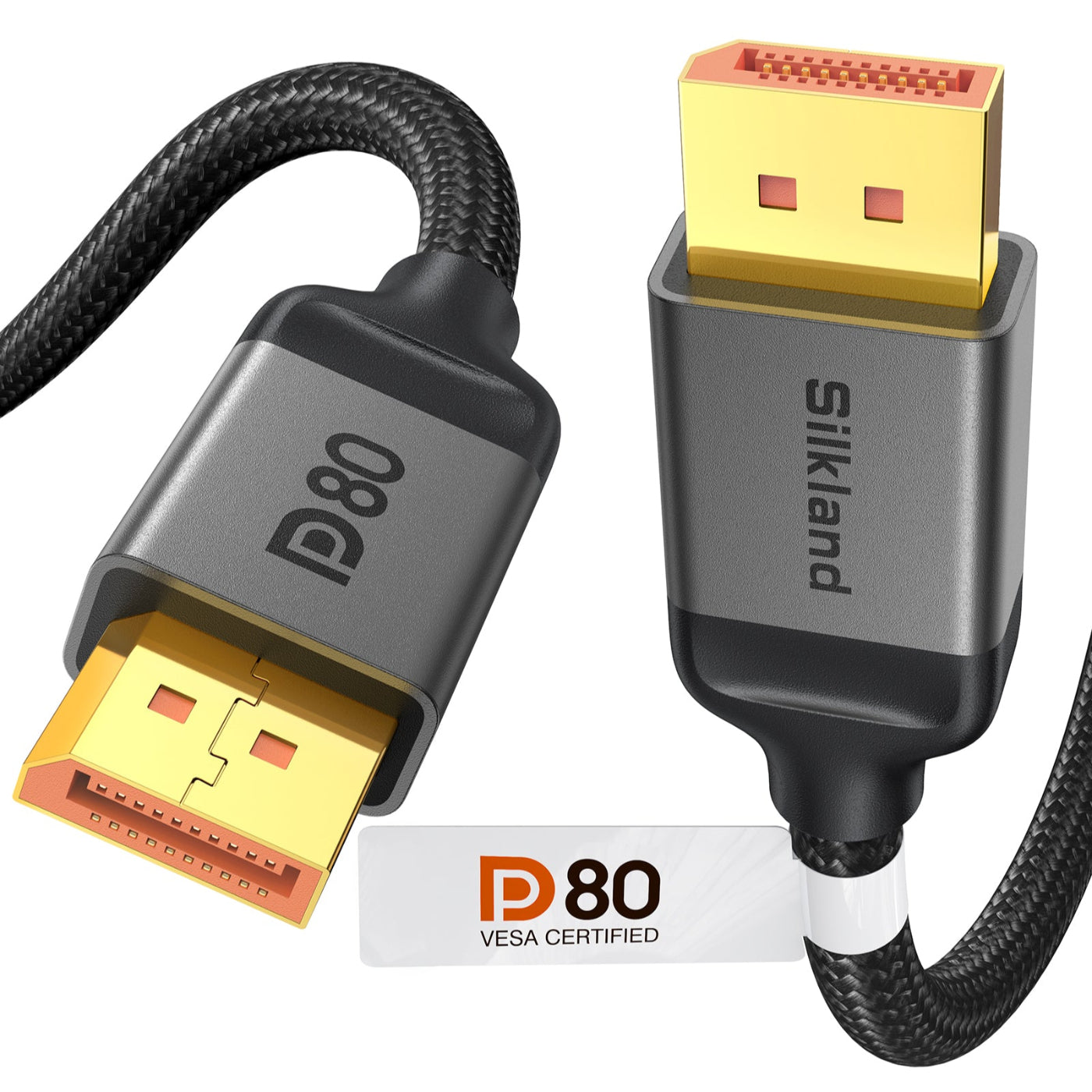
[VESA Certified] Silkland 80Gbps DisplayPort Cable 2.1
As the first VESA-Certified DP80 DisplayPort 2.1 cable, Silkland delivers a massive 80Gbps bandwidth supporting uncompressed 4K@240Hz and 8K@60Hz for ultimate, lag-free visuals. Engineered for elite gaming setups (RTX 5090/4090 & Odyssey G9), this ultra-durable nylon-braided cable features advanced VRR/DSC technologies and a 24-month warranty.
Share:
Where to Watch the FIFA World Cup 2026: Dai,Dai,iko!
USB-C 3.2 vs 3.1 vs 2.0: What's the Difference and Which One Do You Need?